"A stick in a bundle cannot be broken."
— Somali ProverbThe Horn of Hope is a holistic, trauma-informed digital ministry that meets refugees and internally displaced persons at their deepest point of need. We recognise that for someone who has lost everything, the Gospel must be demonstrated before it can be explained — so we integrate compassionate digital aid with discipleship and community.
Our approach leverages every accessible digital channel — HopeLine SMS, encrypted care groups, solar-powered HopeHubs, AI crisis chatbots, and multilingual audio testimonies — reaching even the most basic feature phones in the world's most volatile displacement zones.
To see displaced communities become catalysts for spiritual renewal — equipped through digital tools to find healing in Christ and carry the Gospel to other displaced people and their nations of origin.
% = Muslim population where applicable. Sources: Pew Research, World Factbook 2023.

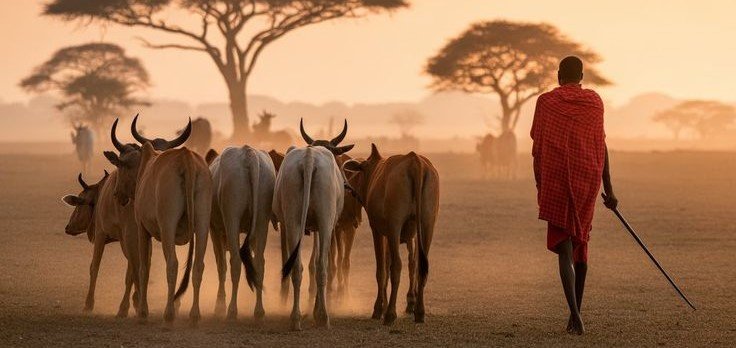
The Horn of Africa is a region perpetually in crisis — defined by a devastating confluence of conflict, drought, and famine. Refugees and IDPs have lost everything: homes, livelihoods, and often family members. They live in overcrowded camps or urban slums, facing extreme vulnerability, trauma, and a profound loss of hope.
The constant struggle for survival overshadows spiritual needs entirely, and traditional pastoral care is impossible at such scale. Many come from Muslim-majority backgrounds, adding cultural and religious complexity to sharing the Gospel.
The challenge is to reach these scattered, suffering masses with a message of hope that addresses both their immense physical needs and their deep spiritual hunger.
For someone who has lost everything, the Gospel must be demonstrated before it can be explained. We integrate humanitarian care with digital evangelism and discipleship.
Targeted mobile ads and SMS campaigns provide vital aid information — water points, food distribution, health services — simultaneously sharing God's love and comfort from Scripture to the most vulnerable at the moment of greatest need.
Audio and video content specifically designed to address grief, loss, and PTSD — featuring testimonies from other displaced believers who have found peace in Christ, distributed via offline devices and toll-free numbers to reach any phone.
Encrypted, moderated online groups via WhatsApp and Signal serve as virtual safe spaces for displaced individuals — providing fellowship, prayer, and emotional support from trained digital caregivers across language and camp boundaries.
Bite-sized, audio-based discipleship courses accessible on basic feature phones — allowing individuals to grow in faith despite chaotic and unstable circumstances, with no internet or smartphone required for core content.

Built for resilience and accessibility — using the most ubiquitous technology available to reach displaced communities across every device, in every language, in every camp.
A free, interactive SMS system delivering daily Bible verses, prayer points, and critical aid information. Users text keywords like "PRAY" or "HOPE" to receive immediate comfort — accessible on any mobile phone, no internet required.
A vast collection of short audio testimonies from refugees, available via toll-free number or offline download — relatable stories of transformation in heart languages from people who understand displacement firsthand.
Private, encrypted groups organised by language or camp location — facilitated by trained moderators delivering daily devotionals, facilitating prayer, and identifying individuals in crisis for escalation to a human responder.
"HopeHubs" in camps are solar-powered stations where refugees charge phones and download Christian media — Bibles, the JESUS Film, music — via Bluetooth or SD card, providing both practical service and Gospel access.
Vehicles equipped with projectors that screen the JESUS Film and hope-filled films in the heart of displacement camps, followed by facilitated discussion groups — bringing the Gospel into communal camp spaces.
Podcast series addressing "Finding Peace After Trauma," "Raising Children in a Camp," and "The God Who Sees You" — distributed on Spotify and via audio library in Somali, Amharic, Arabic, Nuer, and other heart languages.
A 24/7 AI chatbot on Messenger and WhatsApp providing initial spiritual and psychological first aid using pre-approved resources — escalating critical cases to a trained human responder when lives are at risk.
Teaching refugees to use smartphones safely and effectively — connecting with family, accessing information, and engaging with the digital ministry ecosystem — building a foundation for ongoing discipleship.
360-degree videos of camp environments enabling global partners and prayer networks to experience the reality of displacement — fostering deeper, more specific, and more faithful intercession for the displaced.
Blockchain technology providing donors with transparent, verifiable tracking of how their gifts are used to support refugees — building trust and accountability that encourages sustained long-term investment in the mission.
These are not statistics. These are people — each one a testament to what happens when the Gospel meets digital compassion in the world's most desperate places.

South Sudan · Refugee in Ethiopia
"She scanned the QR code. It led to a voice, a woman from her own tribe, speaking of a day when the guns fell silent — and she found a peace that no war could touch."
The sound of artillery was the lullaby of Anya's childhood. When the soldiers came to her village, she grabbed her younger brother and ran — becoming a speck in a river of humanity fleeing into Ethiopia. In the camp, anonymity was her only shield. One day, a community health worker handed her a leaflet with a QR code: "For your phone. Stories for when the night is too loud."
That night, huddled in her tent, Anya scanned the code. She found a voice, a woman from her own tribe, speaking of a Man named Jesus who calmed storms. She wept, joined a secret WhatsApp group for Dinka women, and found her voice again. The digital campfire of that group became her new village. She is now a moderator — a beacon for other lost girls — proving that even the most shattered life can be mended with the golden thread of hope found in Christ.

Mogadishu · Dadaab Refugee Camp, Kenya
"Children of God. The phrase echoed in his soul. He wasn't a number — he was offered sonship. A new, unshakable identity in Christ."
Khadar was a respected teacher in Mogadishu — a man of dignity. Then Al-Shabaab labelled him an infidel for teaching a Western curriculum. He fled with nothing but the clothes on his back, his dignity left in the dust of the road to Dadaab refugee camp. In the vast, dusty expanse, he was just a number. He downloaded an audio Bible app to practise his English — a feeble attempt to cling to his past.
But the words of the Gospel of John struck him with unexpected force: "To all who received him, he gave the right to become children of God." Through a secure Telegram channel, he connected with a Somali disciple-maker. His journey from respected teacher to displaced refugee found its ultimate meaning not in restoring his former status, but in receiving a new identity in Christ. He now leads an audio Bible study for other disenfranchised men in the camp.
Every dollar is tracked, measured, and accountable. Our trauma-informed model integrates with existing humanitarian aid structures — maximising Kingdom impact per dollar spent.
| Metric | Year 1 | Year 2 | Year 3 | Total |
|---|---|---|---|---|
| People Reached | 4,800,000 | 5,100,000 | 5,100,000 | 15,000,000 |
| Decisions for Christ | 720,000 | 765,000 | 765,000 | 2,250,000 |
| Follow-up | 187,200 | 198,900 | 198,900 | 585,000 |
| Digital Hybrid Groups | 90 | 110 | 130 | 330 |
| Multiplying Disciples | 1,516 | 1,611 | 1,611 | 4,738 |
| Believers Trained | 364 | 387 | 387 | 1,138 |
| Lifelong Workers Raised | 30 | 32 | 32 | 94 |
Sustainability is driven by a "Digital Marketplace" within the ministry app where refugee artisans showcase and sell crafts — with a percentage supporting the mission — and by training refugees in digital skills (data entry, virtual assistance) to generate income that funds ongoing operations.

Join the Mission
Your partnership can turn a refugee camp into a sanctuary of hope. Every gift — of any size — brings the light of Christ to those living in the shadow of despair.
Provide a month of HopeLine SMS services for 100 people — daily Scripture and aid information delivered to their phones.
Give $25Equip a solar-powered HopeHub — a charging station and Gospel media centre serving an entire camp sector.
Give $100Fund a mobile film screening of the JESUS Film for an entire camp sector, followed by facilitated discussion and follow-up.
Give $1,000Ways to Partner
There are many ways to stand with the displaced. Choose the partnership model that fits your capacity and calling.
Give a cash donation — one-time or recurring — to directly fund digital ministry, trauma care content, and disciple-making across the Horn of Africa.
Give Now →Donate equipment, solar panels, phones, tablets, or other digital tools and resources that equip HopeHub stations and ministry teams on the ground.
Donate Resources →Volunteer expertise in trauma counselling, audio production, translation, software development, or digital literacy training to build the Horn of Hope infrastructure.
Offer Your Skills →Partner your church, NGO, humanitarian institution, or company in a formal collaboration — co-funding, co-deploying, and serving displaced communities together.
Partner With Us →Join the Team · Make a Difference
Use your time and skills to transform communities. Whether you are a digital professional, a storyteller, or a community champion — your gifts matter in this mission.
Apply to Volunteer →Get in Touch
Have a question, a partnership idea, or want to know more about the ADD Project? Fill in the form and our team will respond promptly.
Or reach us directly at:
add.dsafrica@cru.org